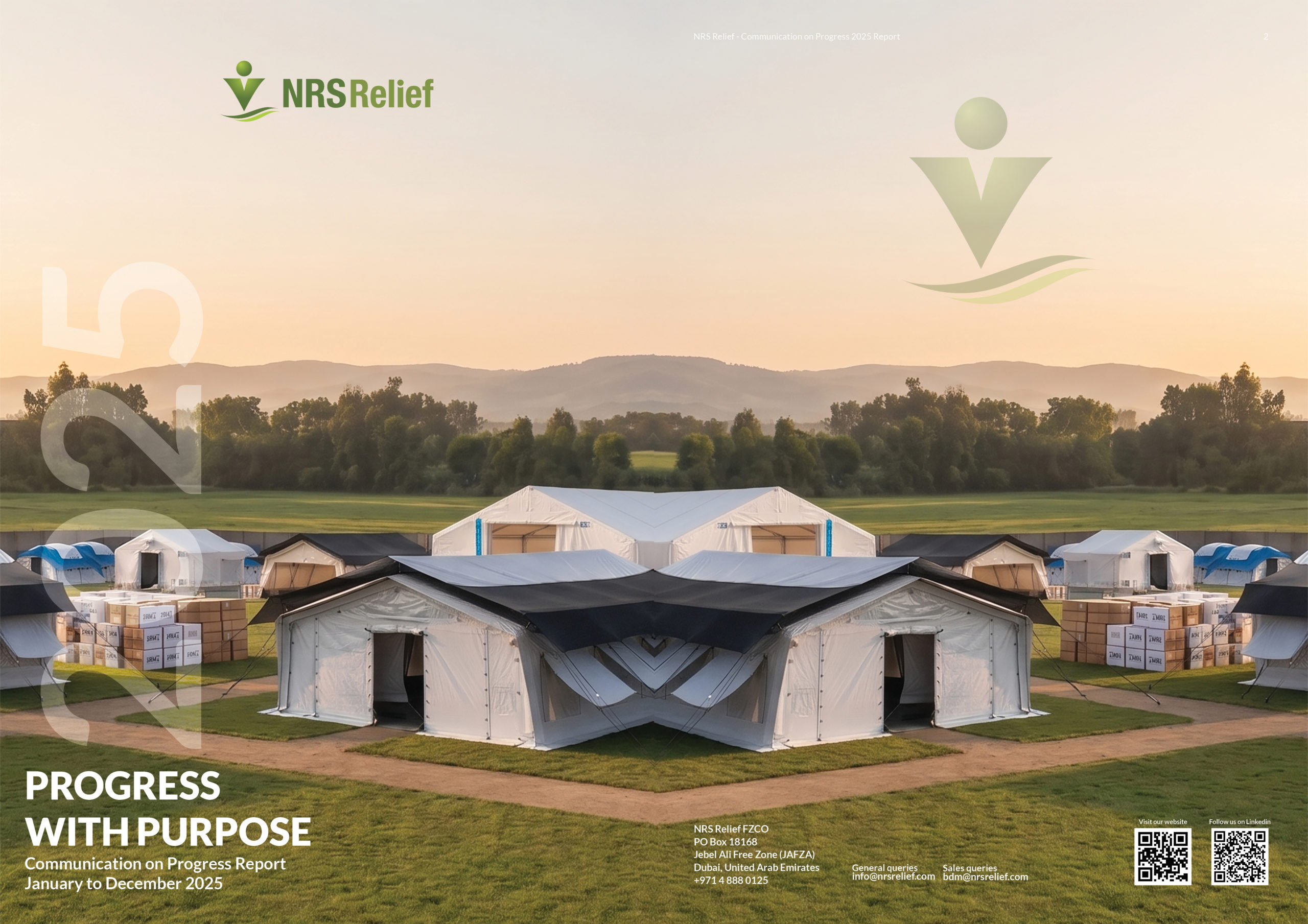





2025: Progress with Purpose


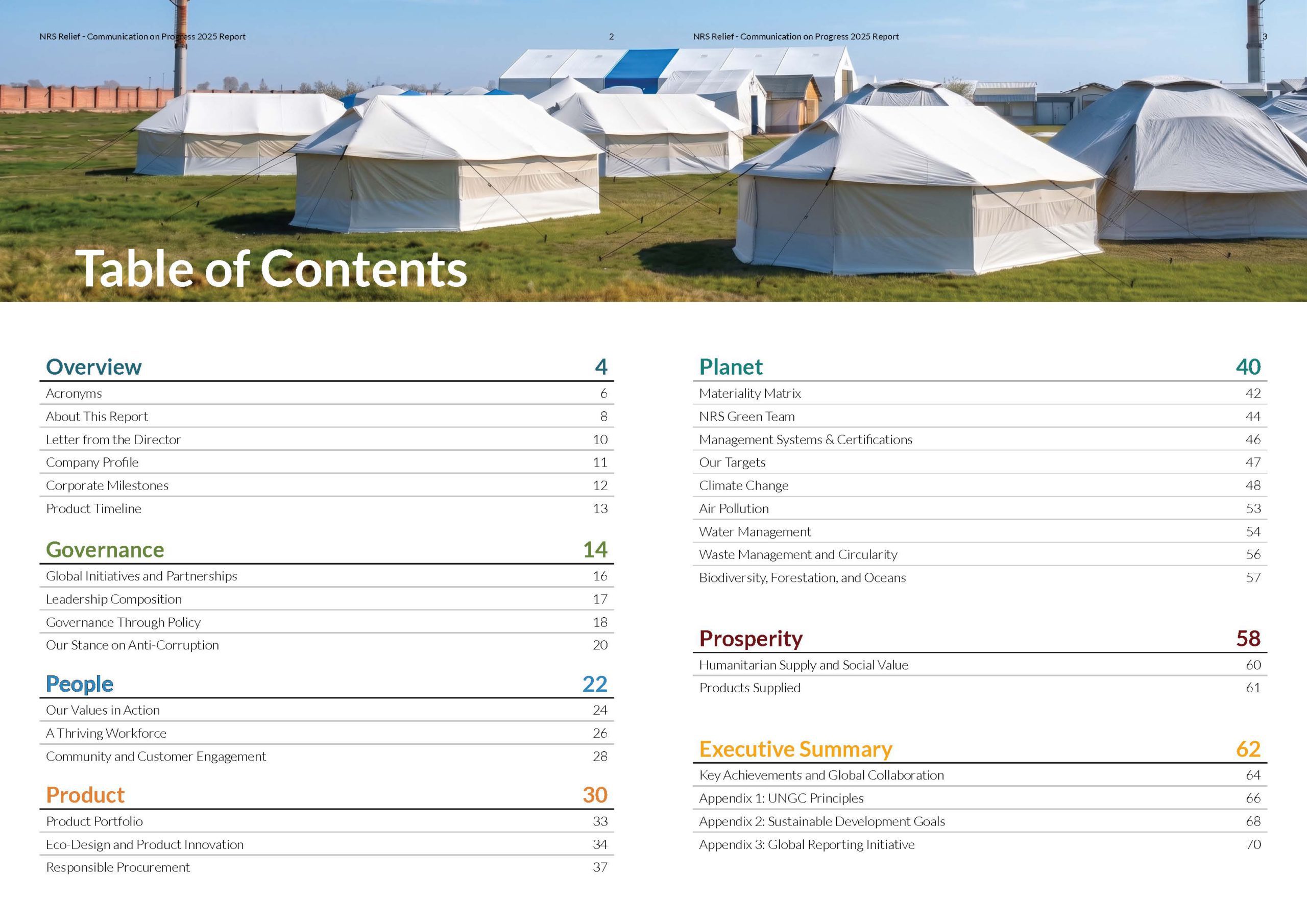
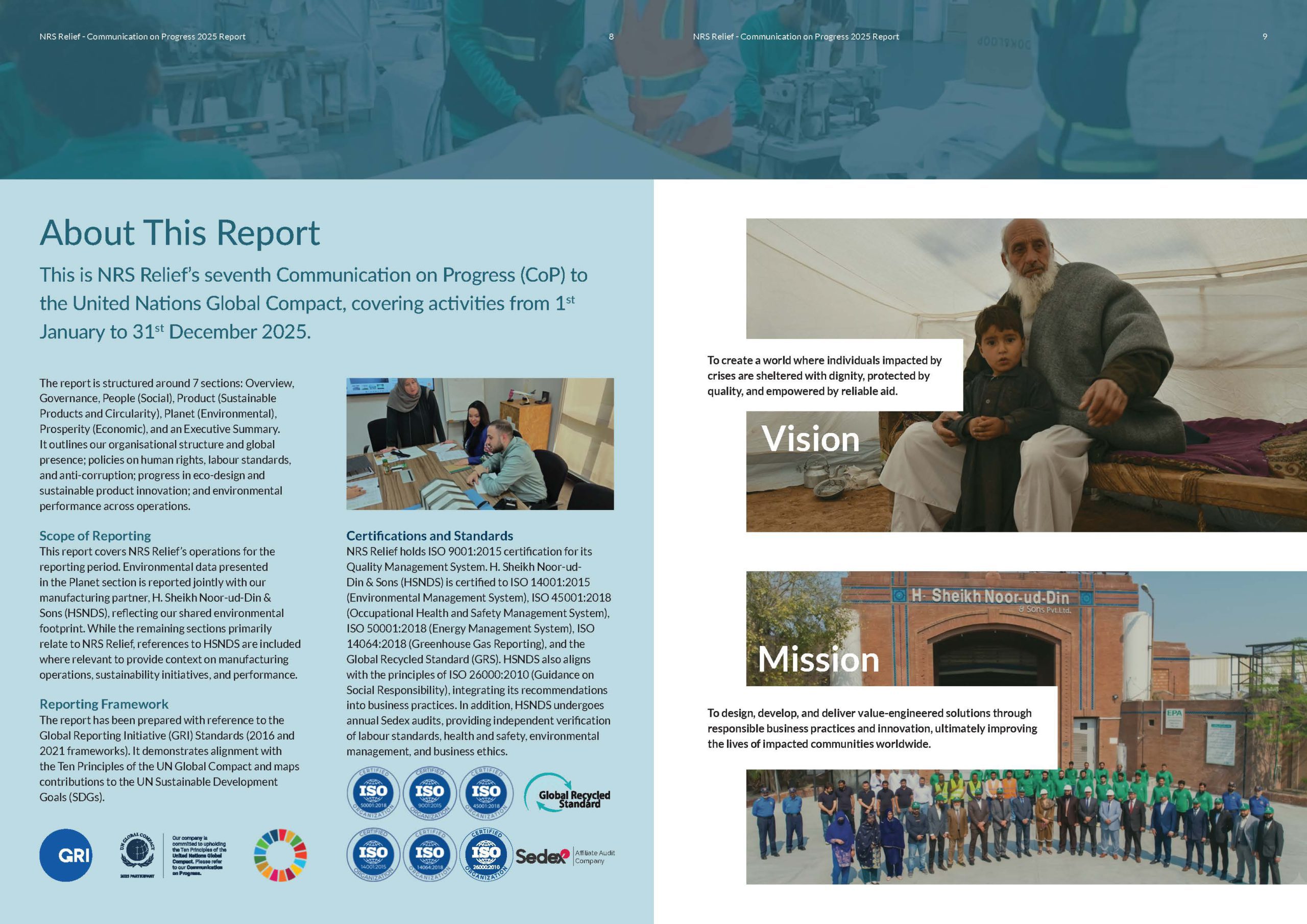
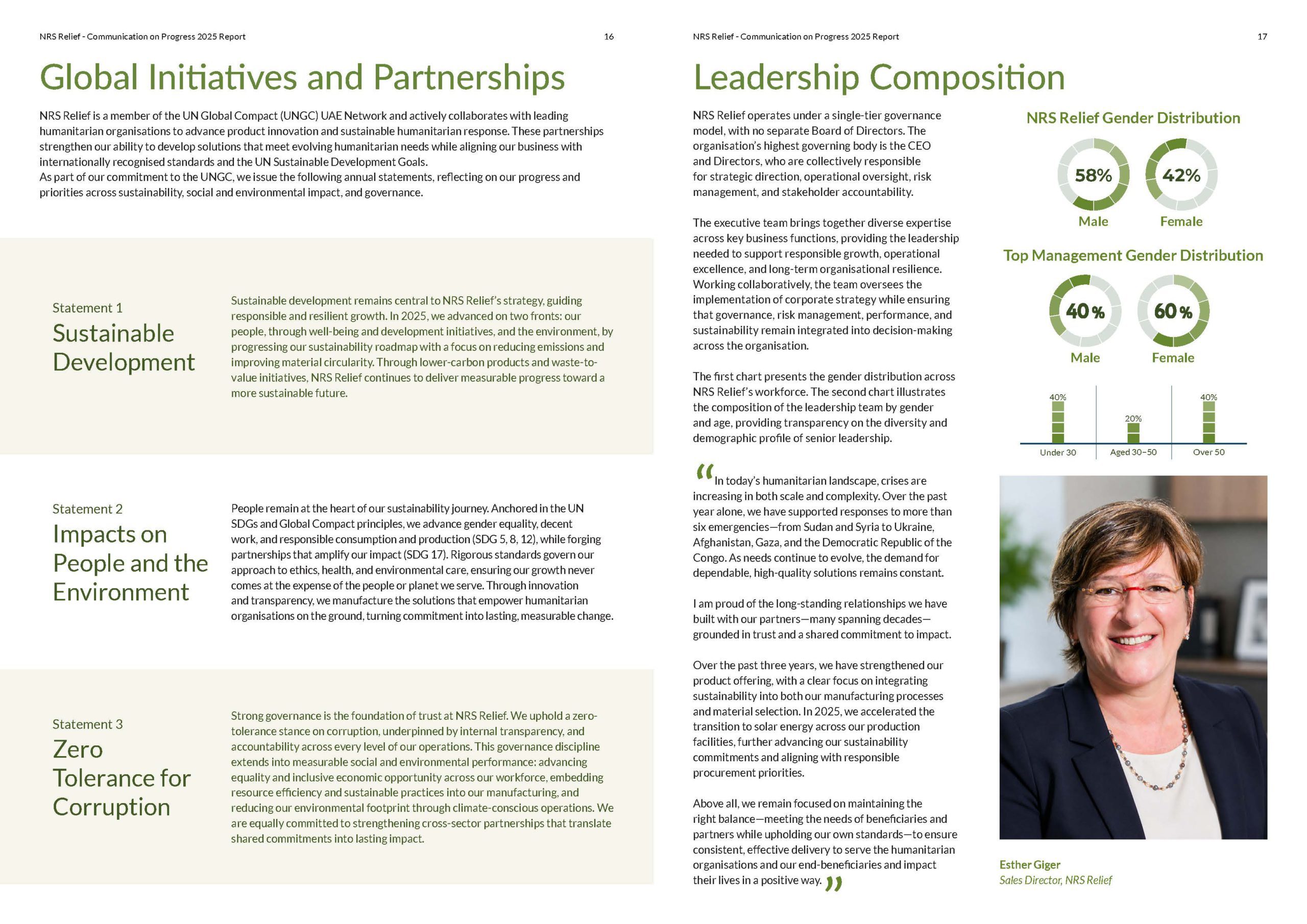
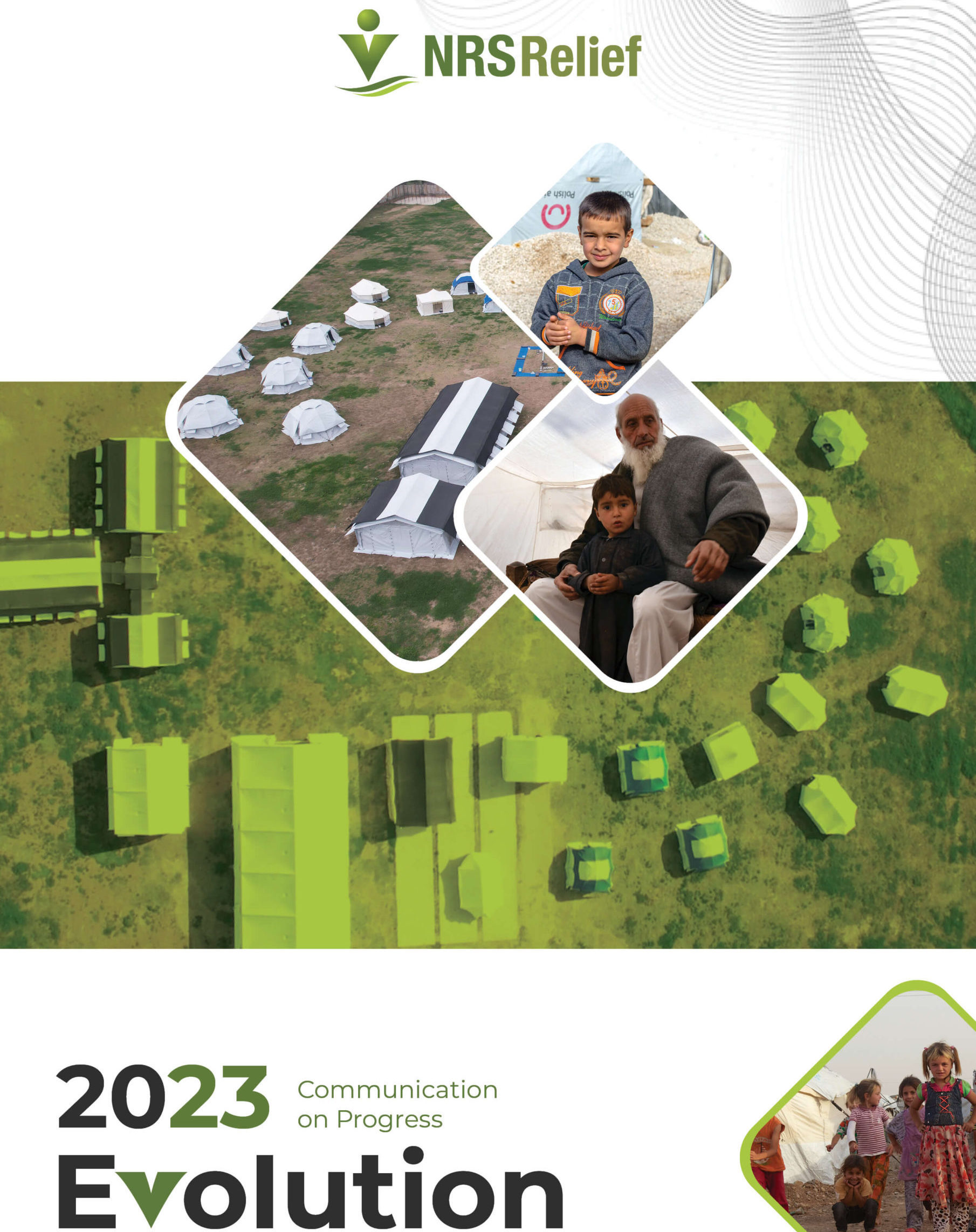
NRS Relief has published its seventh Communication on Progress (CoP) to the UN Global Compact, Progress with Purpose, covering the 2025 reporting year. The report sets out how the organisation balanced two realities at once: humanitarian need remained high across multiple active responses — including Afghanistan, Myanmar, Sudan, Gaza, and Ukraine — while funding across the sector continued to tighten. Across its five pillars, Governance, People, Product, Planet, and Prosperity, the report is mapped against the UN Global Compact’s Ten Principles, the GRI Standards, and the Sustainable Development Goals.
Governance sets the tone for the rest of the report. It grounds its account in practical detail, describing what a zero-tolerance stance on corruption and child labour looks like in daily operations — the Code of Conduct, the whistleblowing mechanism, and the due diligence built into supplier relationships. It also reports openly on progress against its own targets, highlighting both the milestones achieved and the priorities carried forward into next year.
That same transparency carries into People. Diversity statistics are presented alongside the practices that support them, from fair recruitment to parental leave and workplace safety. The report also documents how NRS Relief engaged the next generation of talent in 2025, including its participation in the Middlesex University Dubai Career Fair, where the team connected with emerging professionals across sustainability, science, logistics, and finance.
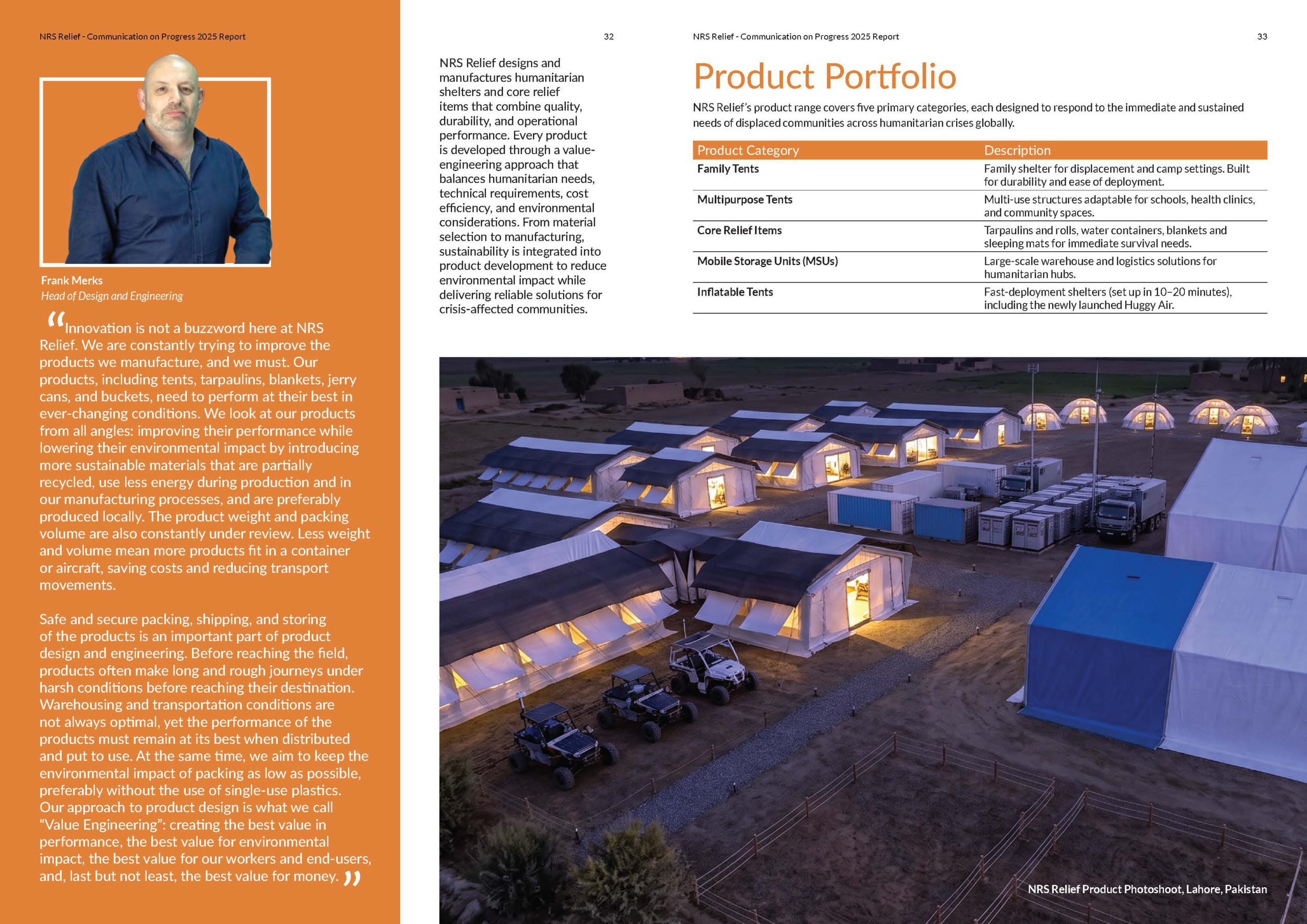
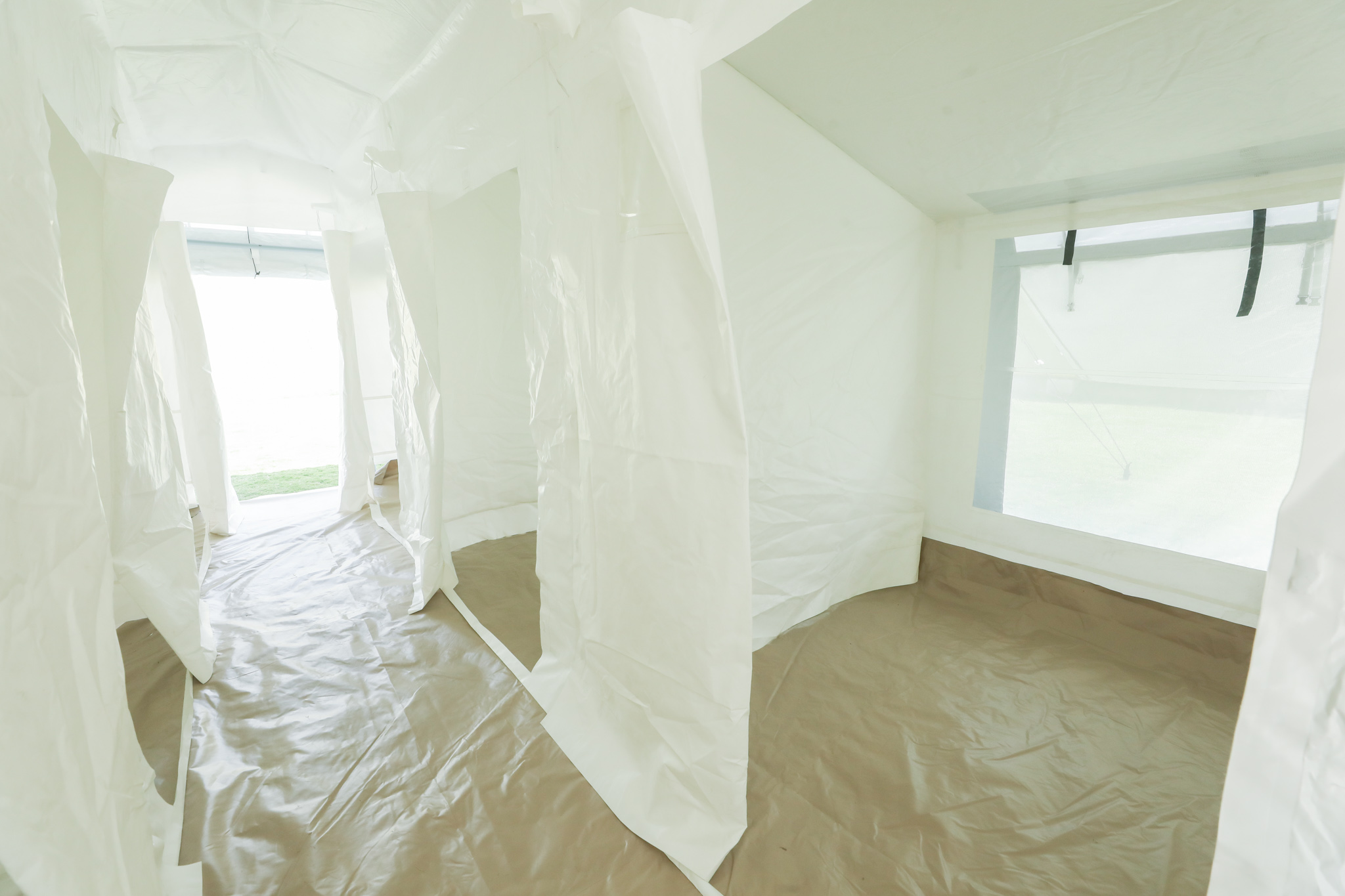
The Product section shows how these commitments extend into what NRS Relief actually manufactures. Instead of a separate “eco” range, the organisation has spent the past two years integrating recycled content, lighter materials, and circular design directly into its core catalogue — the tarpaulins, blankets, and tents that make up the bulk of what reaches the field. In 2025, that approach extended into shelter systems for the first time, with the introduction of the Eco Viva Tent and Eco GeoHome. This required particular care: shelters are structural systems with years of development history and demanding safety requirements, which limits how quickly materials can be substituted without compromising performance.
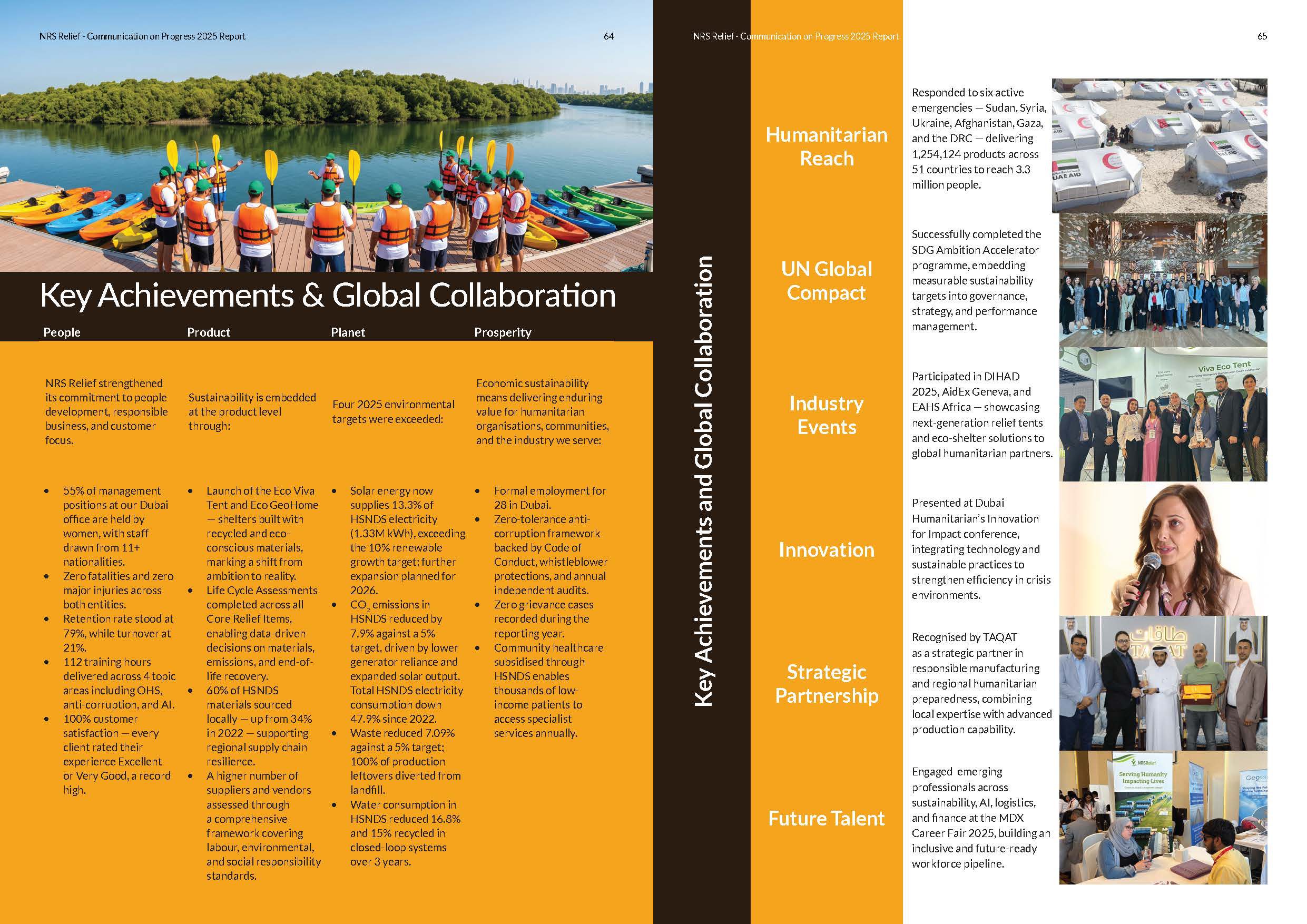
The same discipline carries through to Planet, where the report details performance at its manufacturing partner, H. Sheikh Noor-ud-Din & Sons in Lahore. Instead of presenting a single sustainability number, it walks through a Sustainability Roadmap to 2030, with annual targets for emissions, water, waste, and renewable energy, and reports performance against each one. This year-on-year framing gives stakeholders visibility into trajectory as well as annual results.
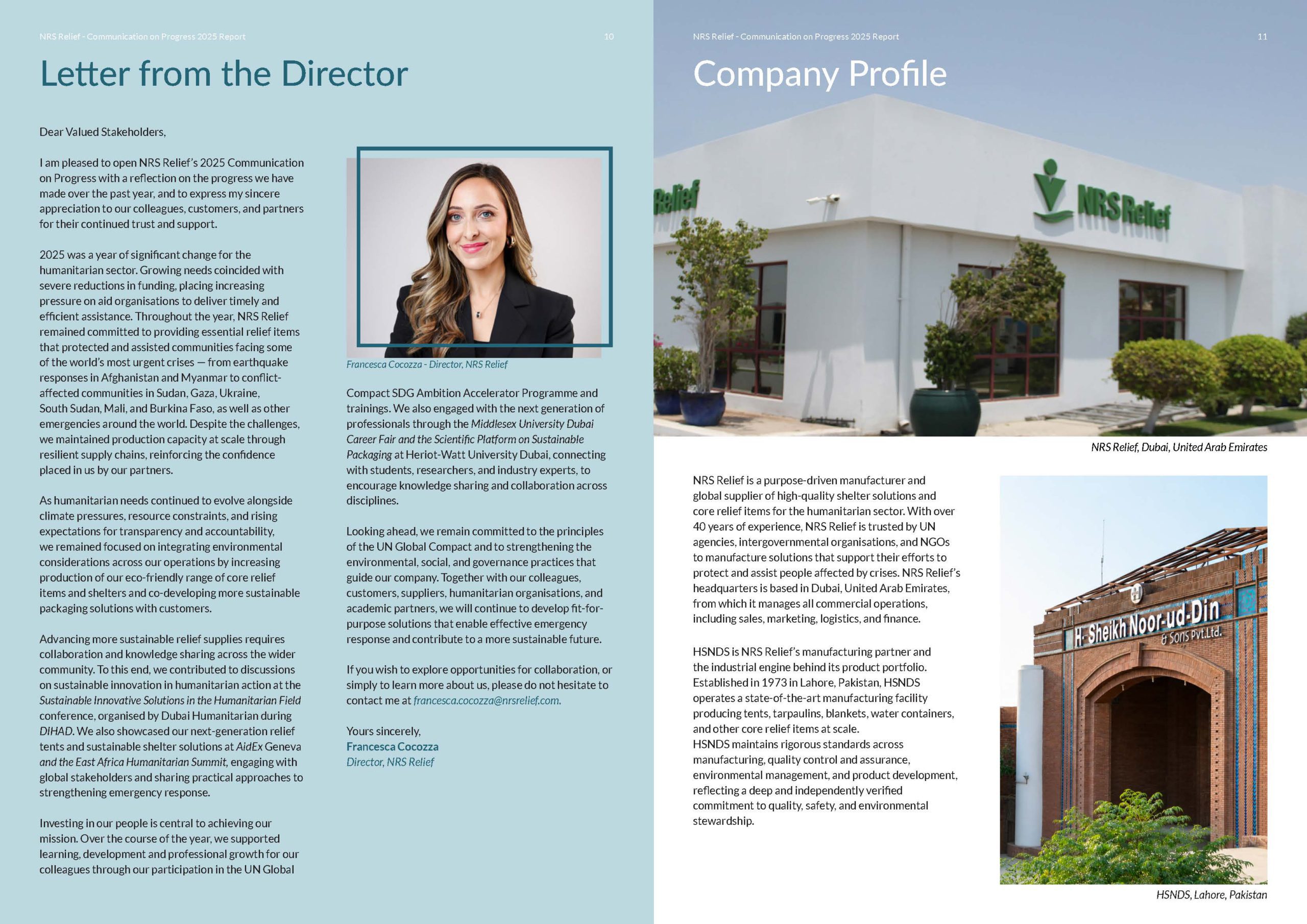
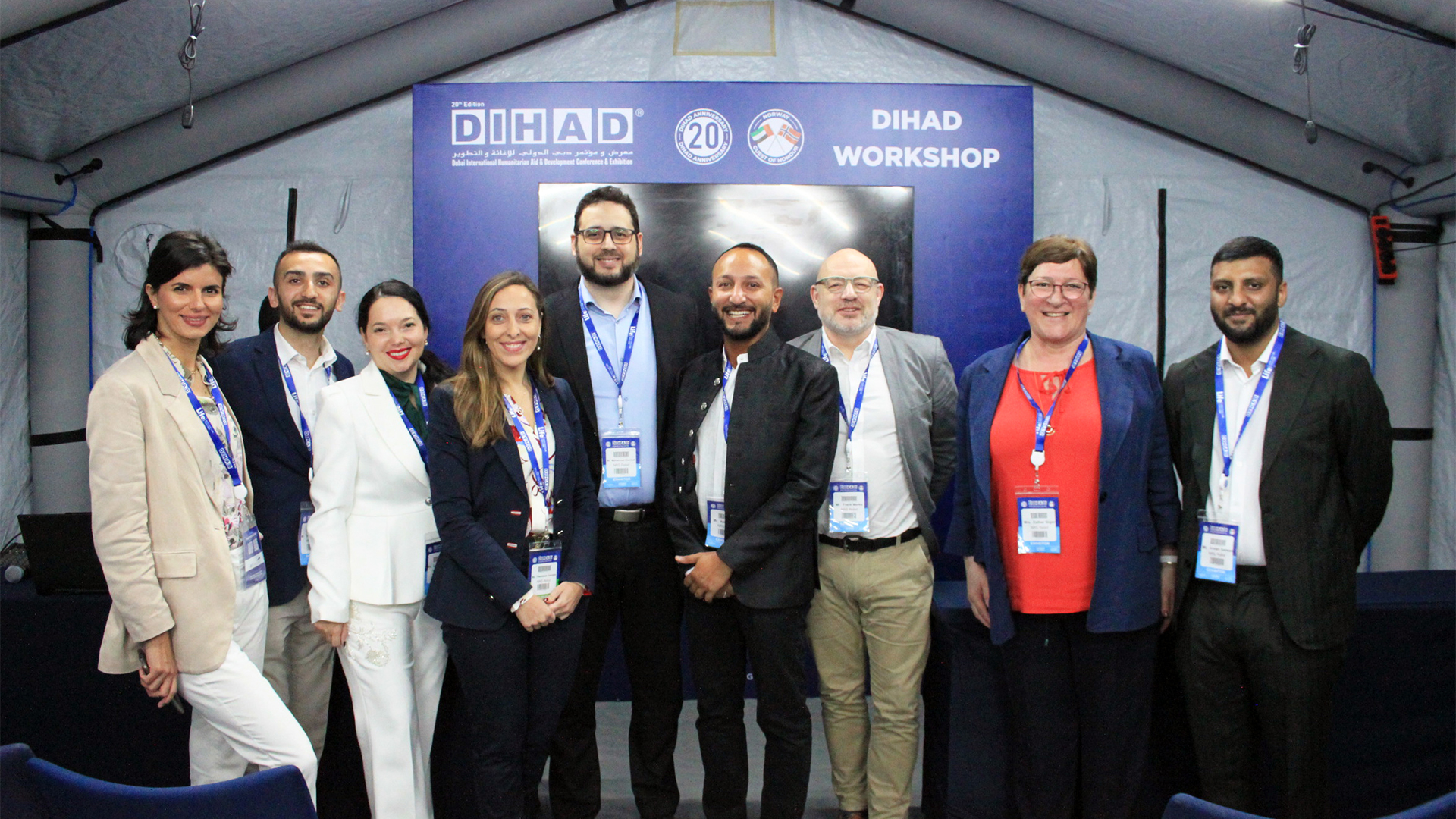
Prosperity brings these threads together, describing NRS Relief’s reach across the humanitarian sector alongside the partnerships that support it. A notable addition to this year’s report is the organisation’s participation in the UN Global Compact UAE Network’s SDG Ambition Accelerator Programme, delivered with PwC Middle East, to translate sustainability ambition into a governed, time-bound roadmap. The report also details NRS Relief’s engagement with the wider humanitarian community through three key events in 2025: the Sustainable Innovative Solutions in the Humanitarian Field conference at DIHAD, where the organisation contributed to discussions on sustainable innovation; AidEx Geneva, where it showcased its next-generation relief tents and sustainable shelter solutions; and the East Africa Humanitarian Summit, which brought further engagement with global stakeholders on strengthening emergency response. Together, these details reflect a report built on substance rather than headline figures. Progress with Purpose is worth reading in full, offering a comprehensive account of how a humanitarian manufacturer is working to make sustainability and reliability a single, shared commitment.
Read the full 2025 Communication on Progress report on the UN Global Compact website.